After a While Away from Publishing, We’re Back with Something Close to Home
It’s been quite a while since we last published anything here. It’s not that we’ve run out of ideas, far from it. It’s just that, between day-to-day work, projects, and all the things that keep coming up, finding some free time to sit down, put an article together, and share it with you can be harder than it seems.
Those of you who have been following this blog for a while know that we’ve always tried to share tutorials, solutions, experiences, and tools related to Linux, virtualization, and the Open Source world. We do it because we love technology, enjoy exploring and experimenting, and, above all, believe that sharing what we learn can help others.
Today, we’ve finally found some time to start writing again. And this time, we’d like to tell you about something a little different: LoboGuard, a family of products we’ve developed at Lobo Brothers for Proxmox environments.
Why LoboGuard?
Anyone who works with systems and infrastructure on a daily basis knows that setting up an environment is one thing, but maintaining it, monitoring it, managing it as it grows, and knowing what to do when something goes wrong is quite another.
Throughout our experience, we’ve encountered many of these situations. And, as often happens in this field, when we can’t find exactly the tool we need, we start researching, testing, and developing our own solutions.
That’s how LoboGuard came about.
It’s not a project we put together overnight, but rather the result of hands-on work, real-world needs, and countless hours spent developing tools we’d like to have at our disposal when it’s time to manage a Proxmox infrastructure.
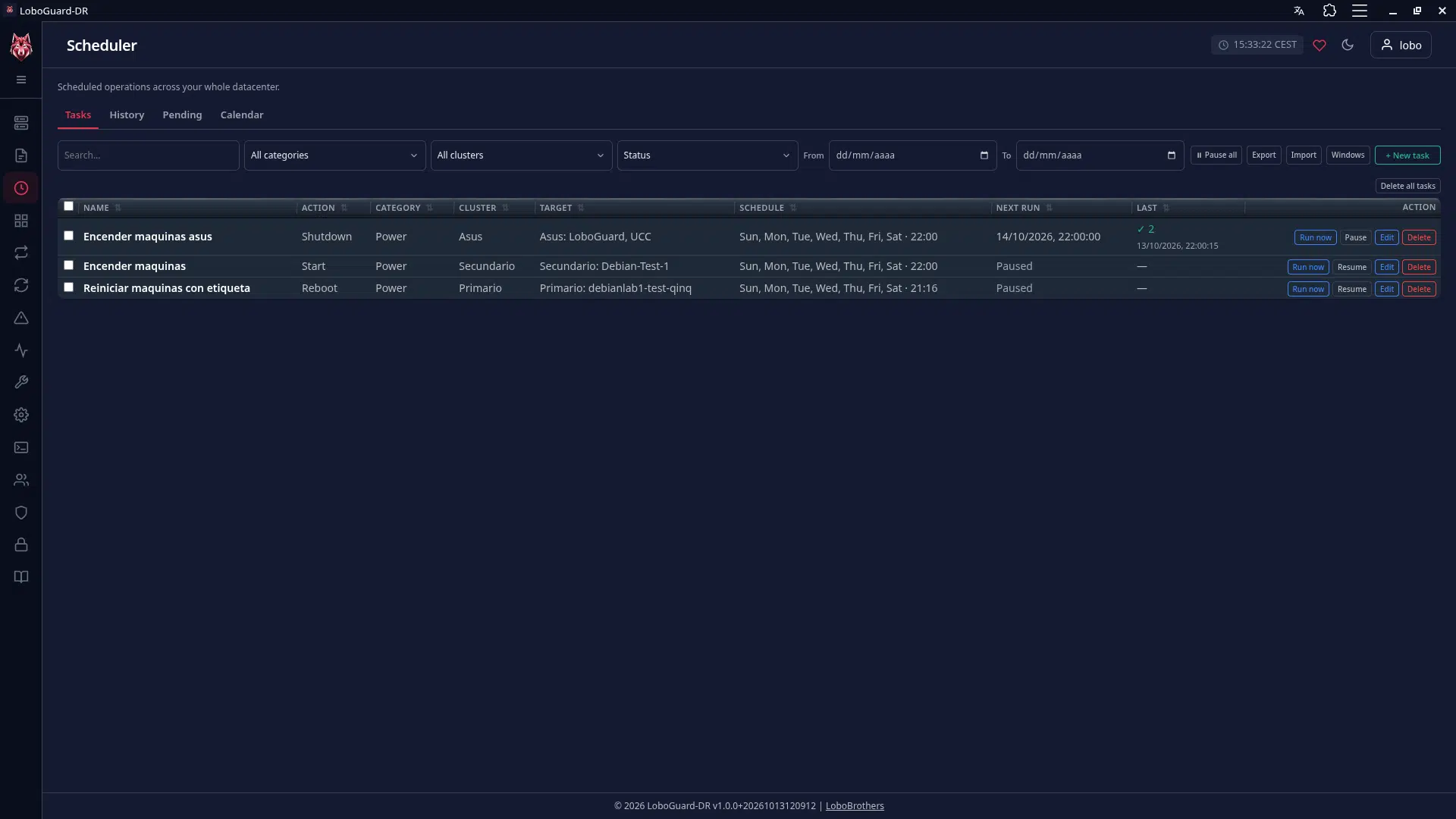
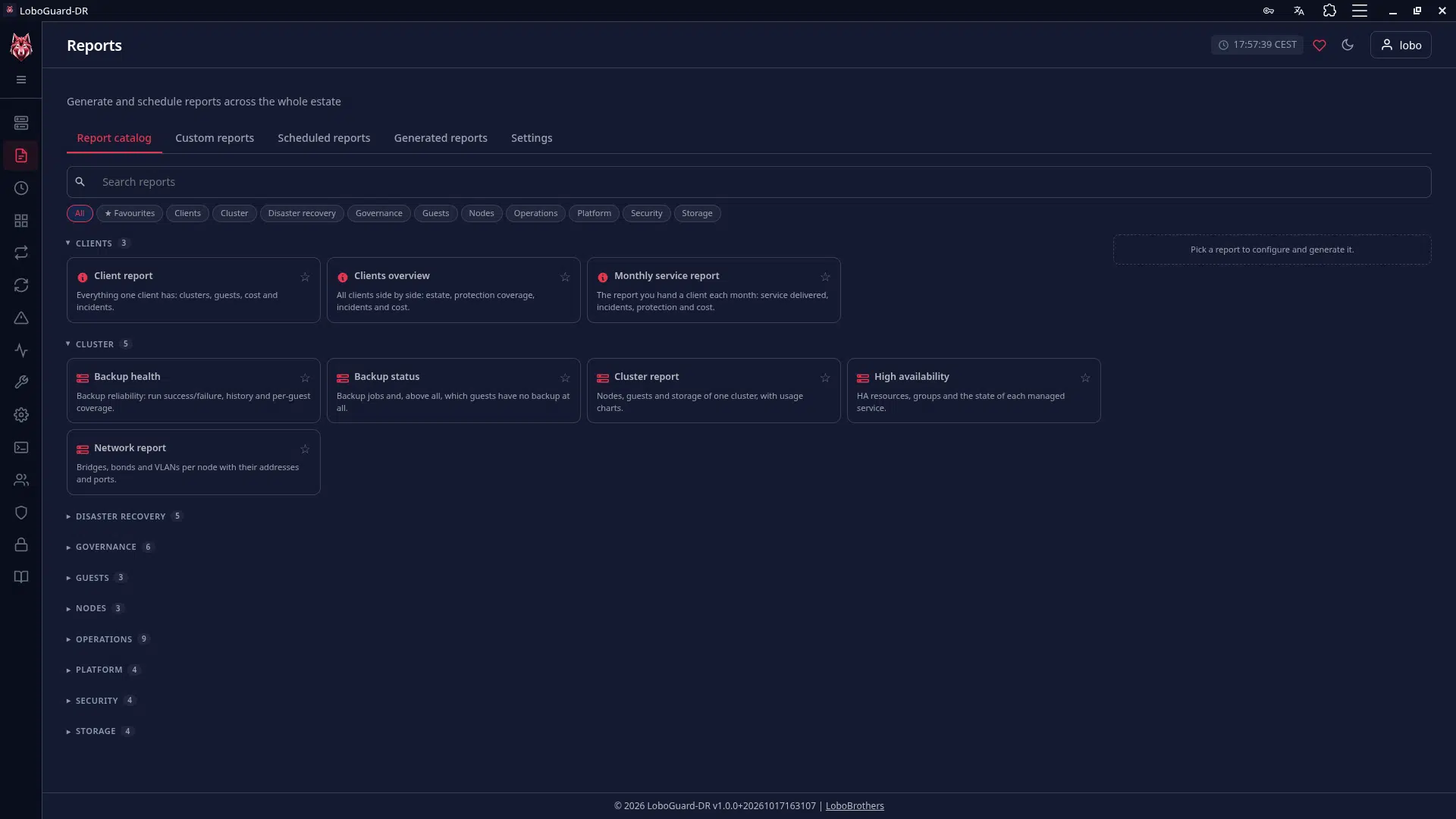
The LoboGuard family consists of several solutions designed to address different needs, from centralized management and monitoring to disaster recovery.
Let’s take a look at them.
LoboGuard-DC: The Proxmox Operations Hub
When you start managing multiple clusters, virtual machines, containers, and resources, constantly switching between different interfaces can become quite a hassle.
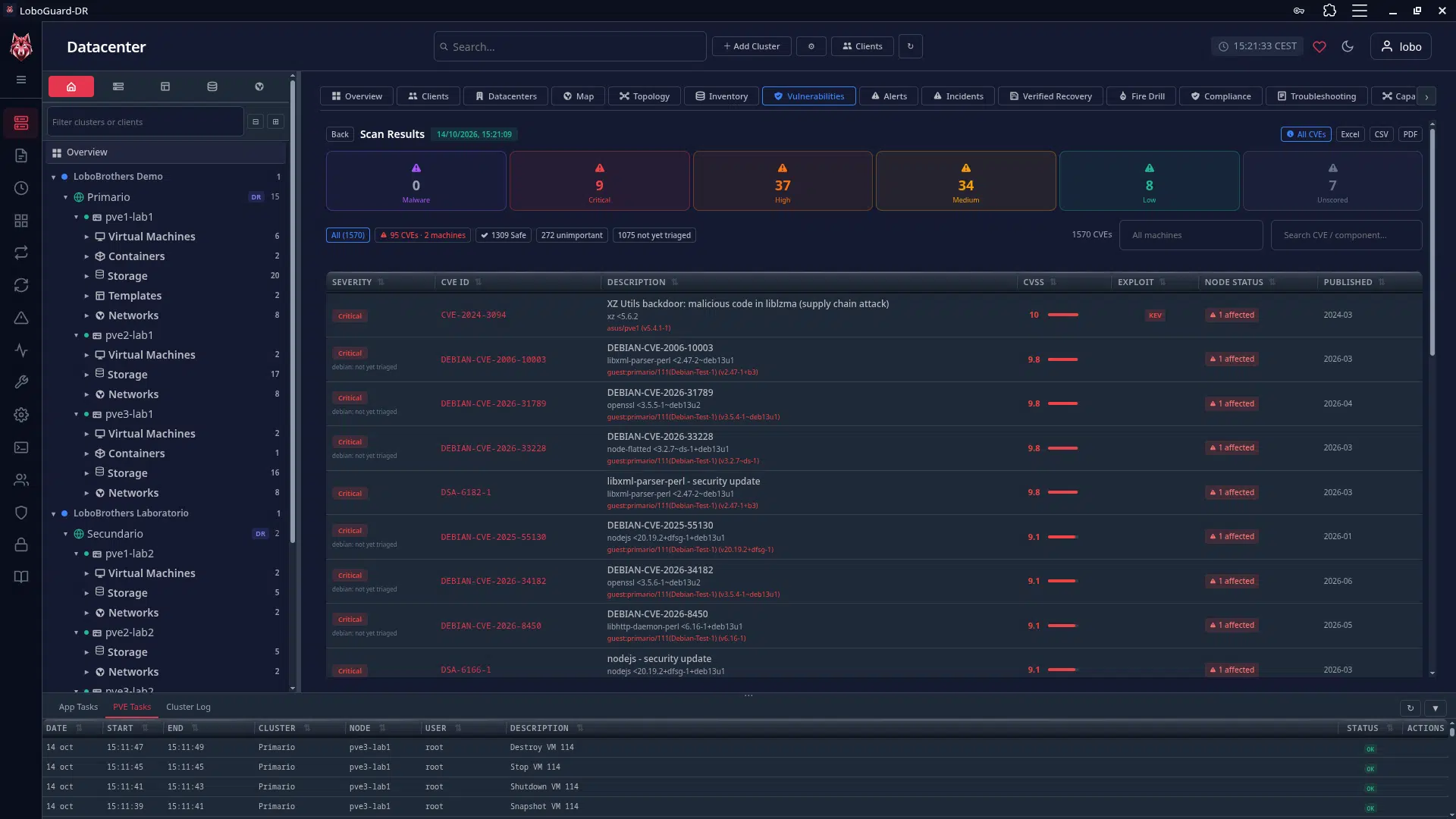
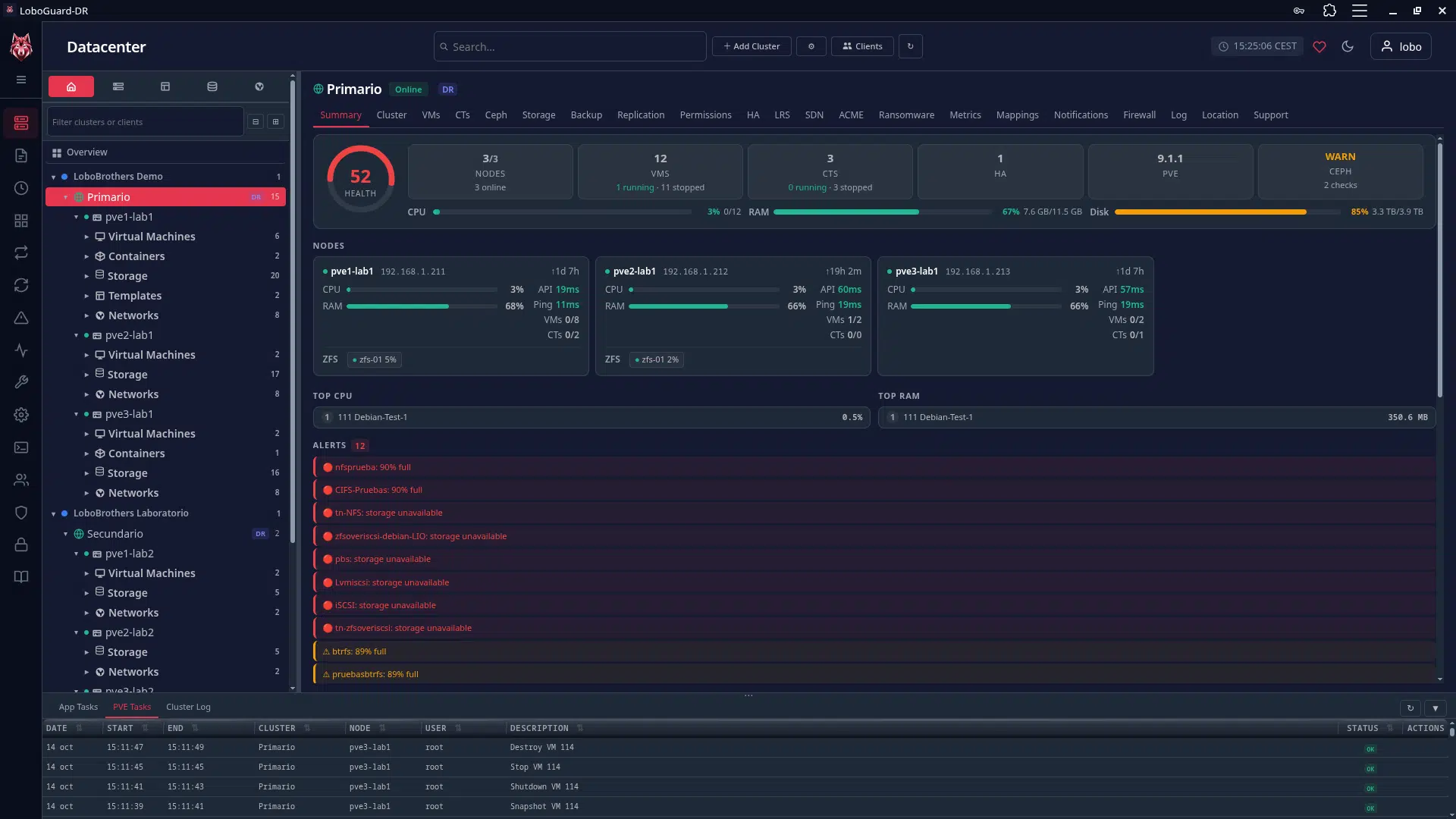
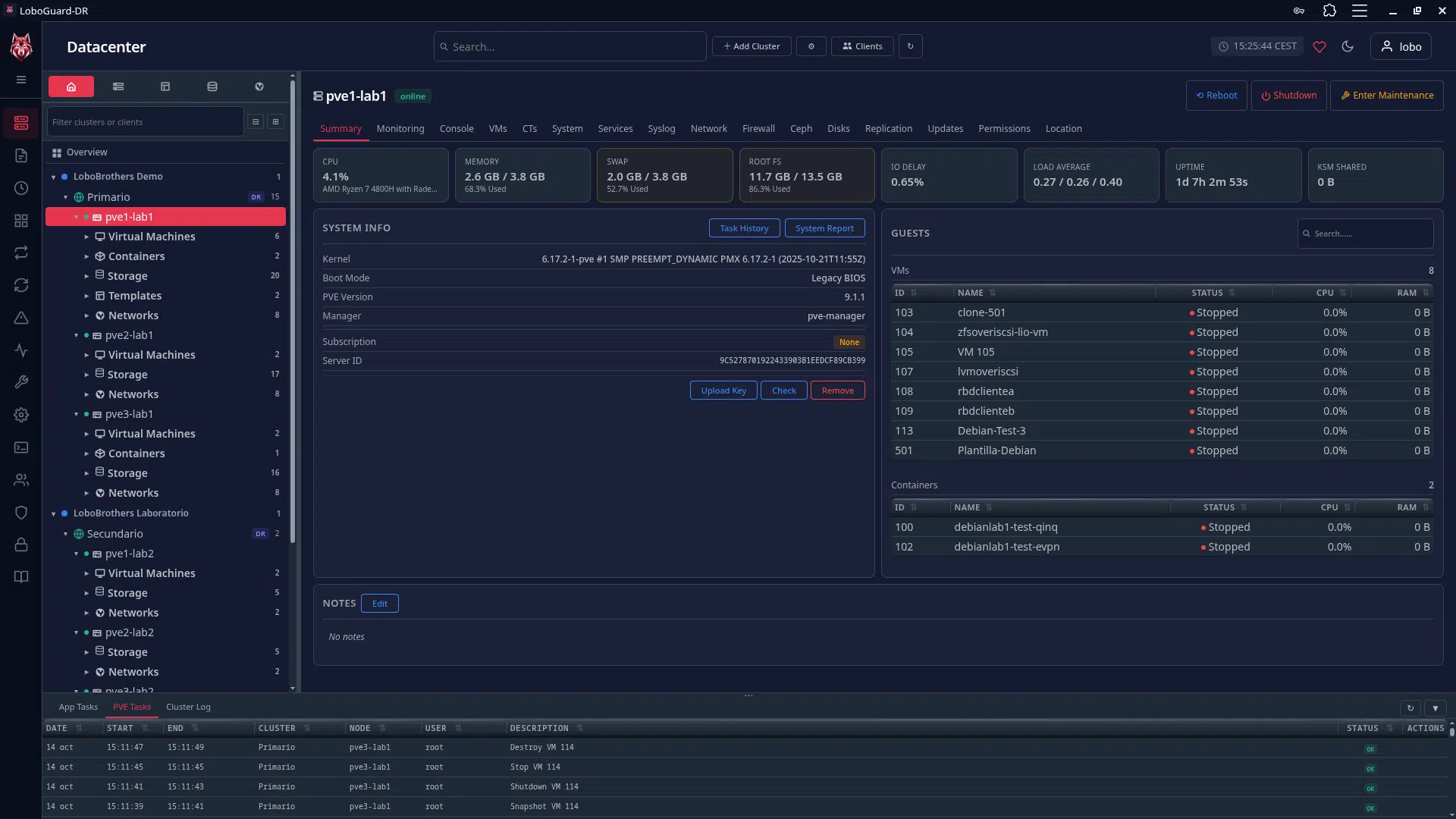
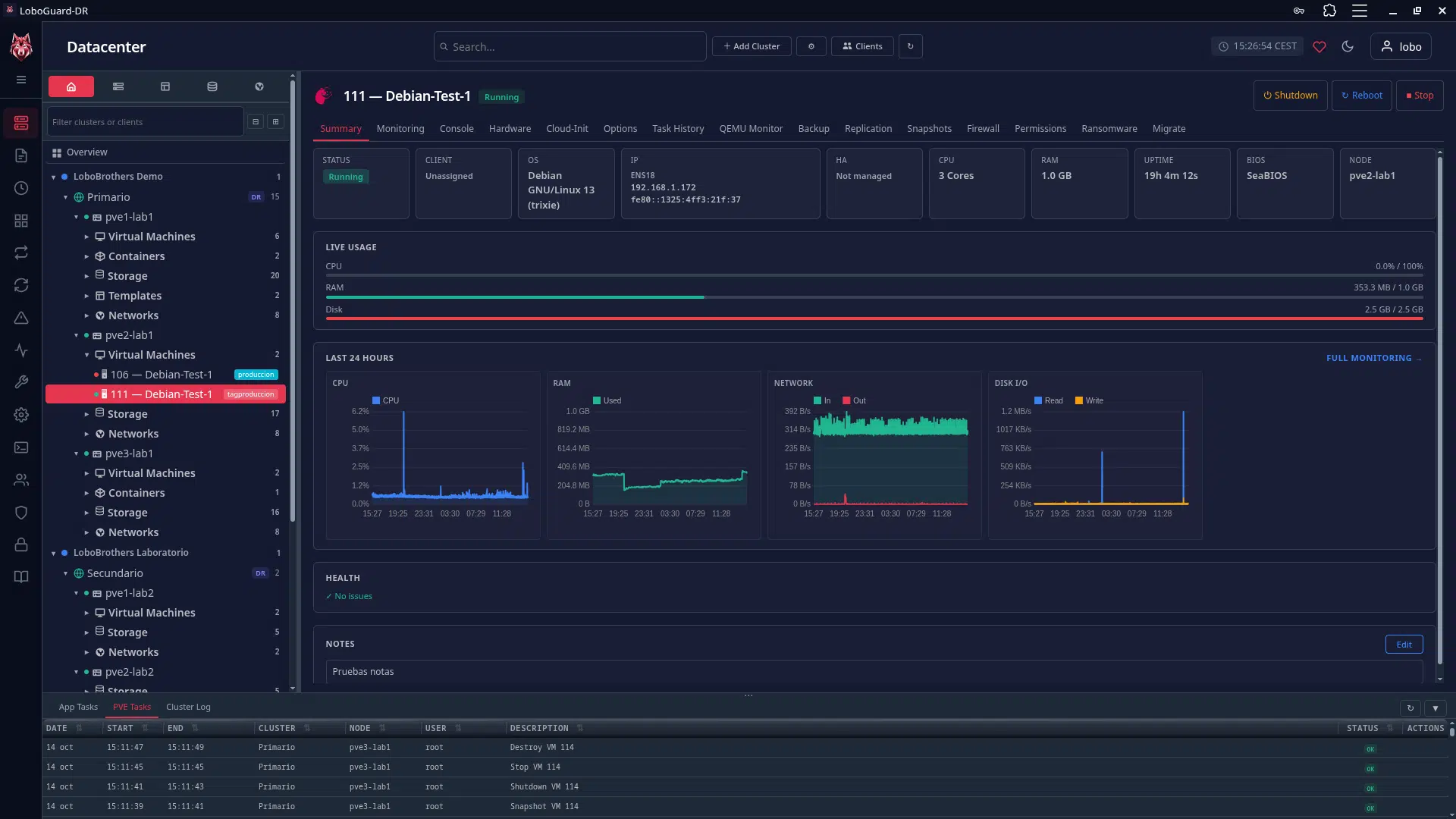
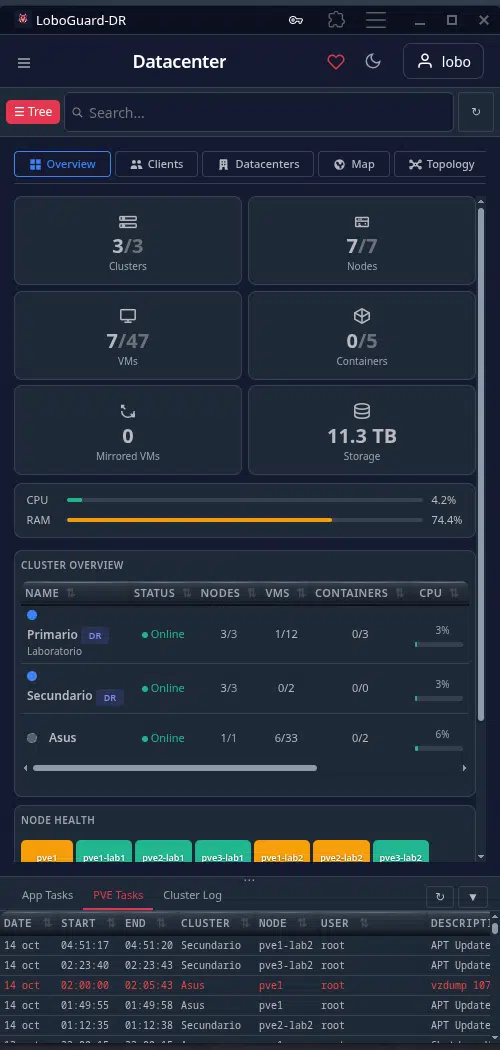
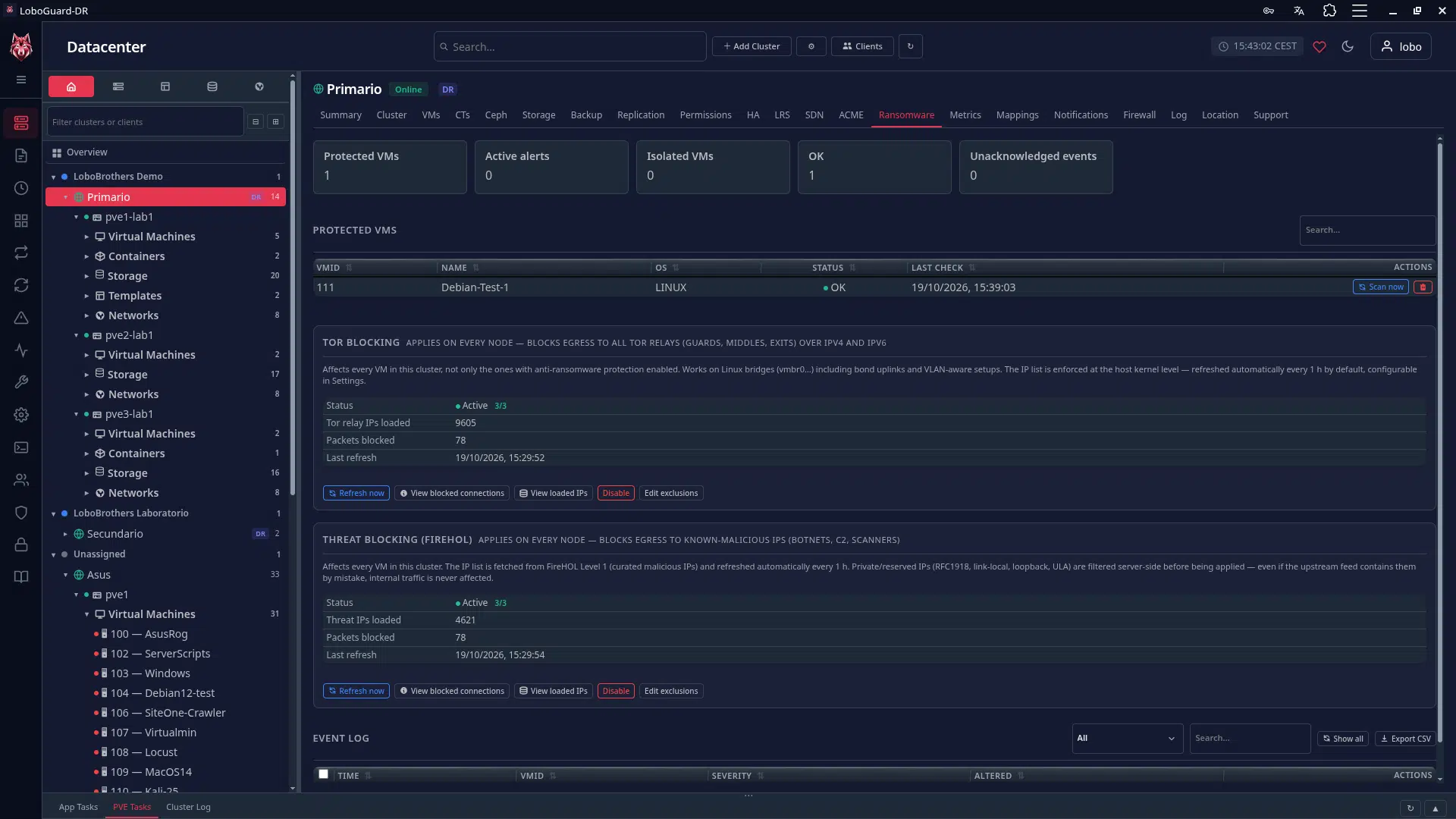
LoboGuard-DC was created specifically to make centralized management of Proxmox infrastructures easier.
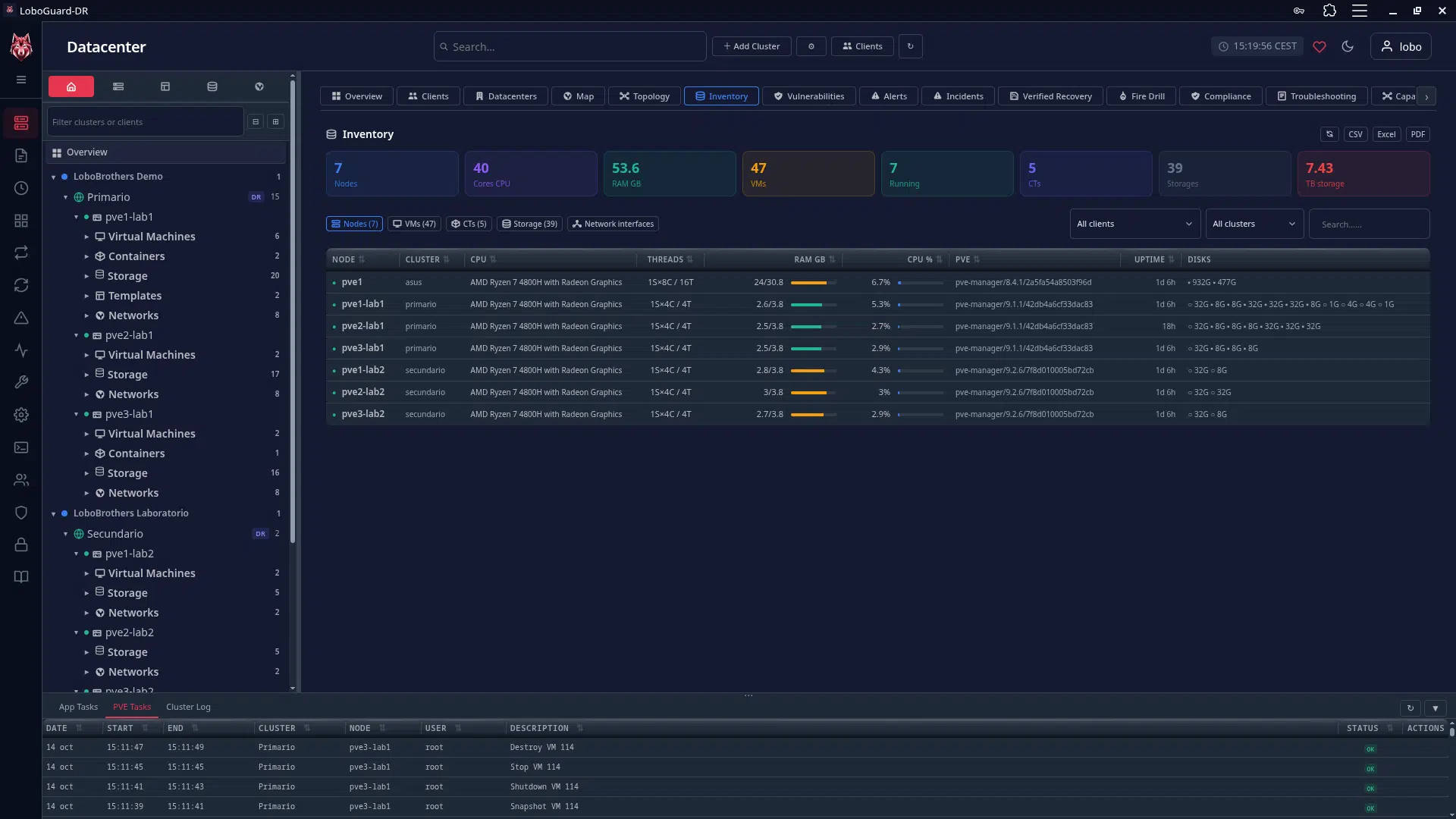
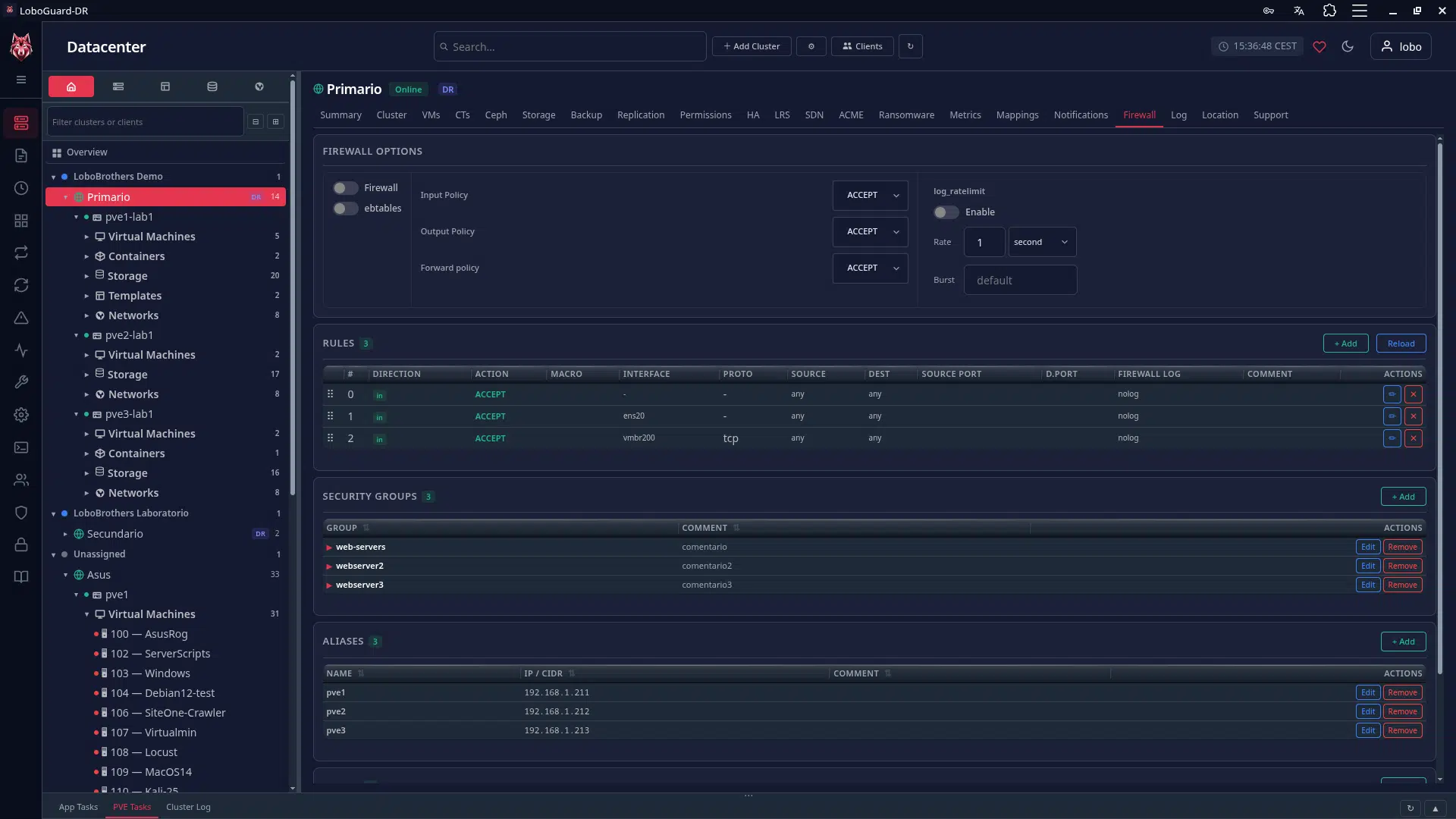
It allows you to work with multiple clusters and multi-tenant environments, providing an overall view of the infrastructure and tools that simplify administrative tasks.
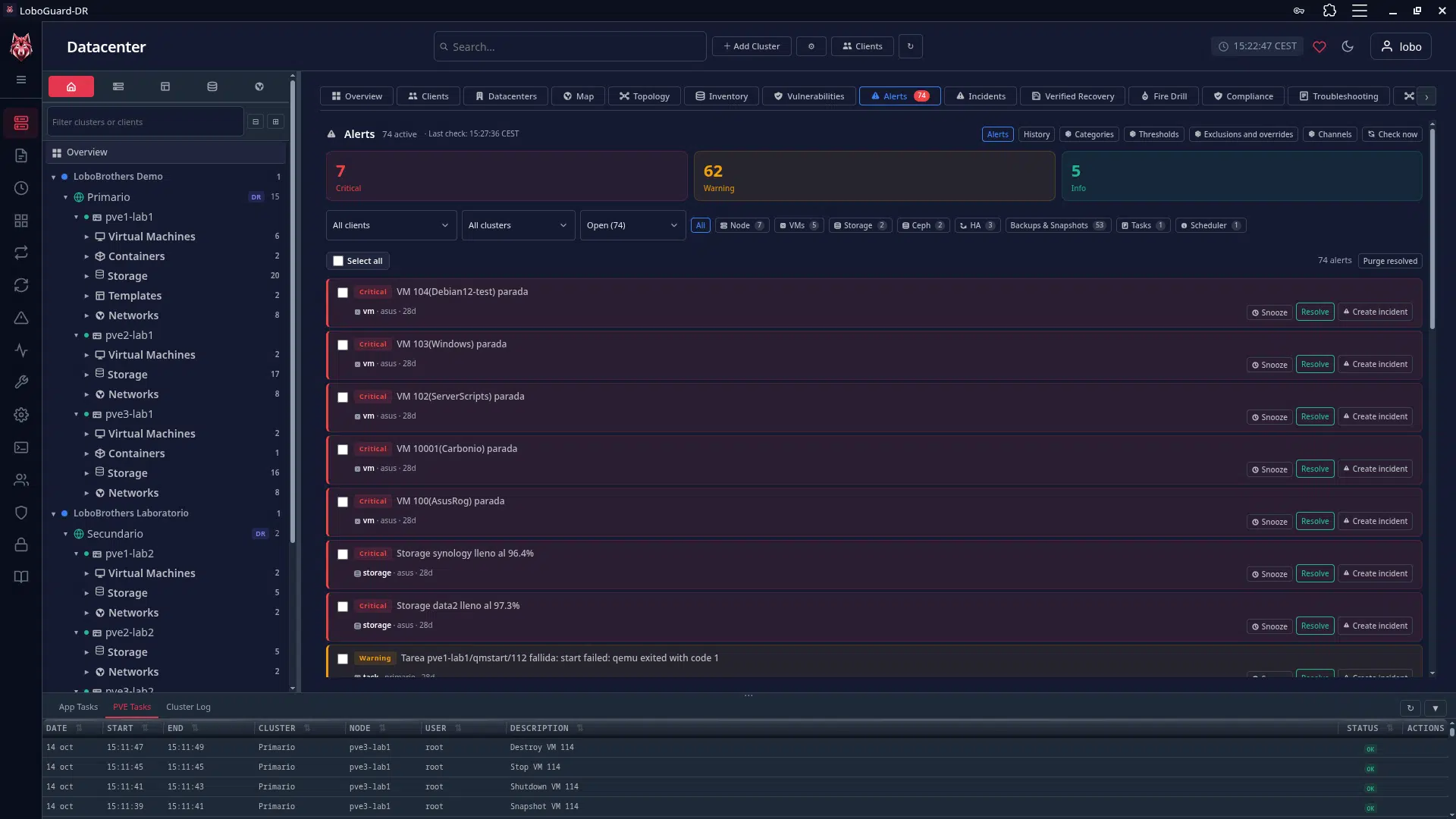
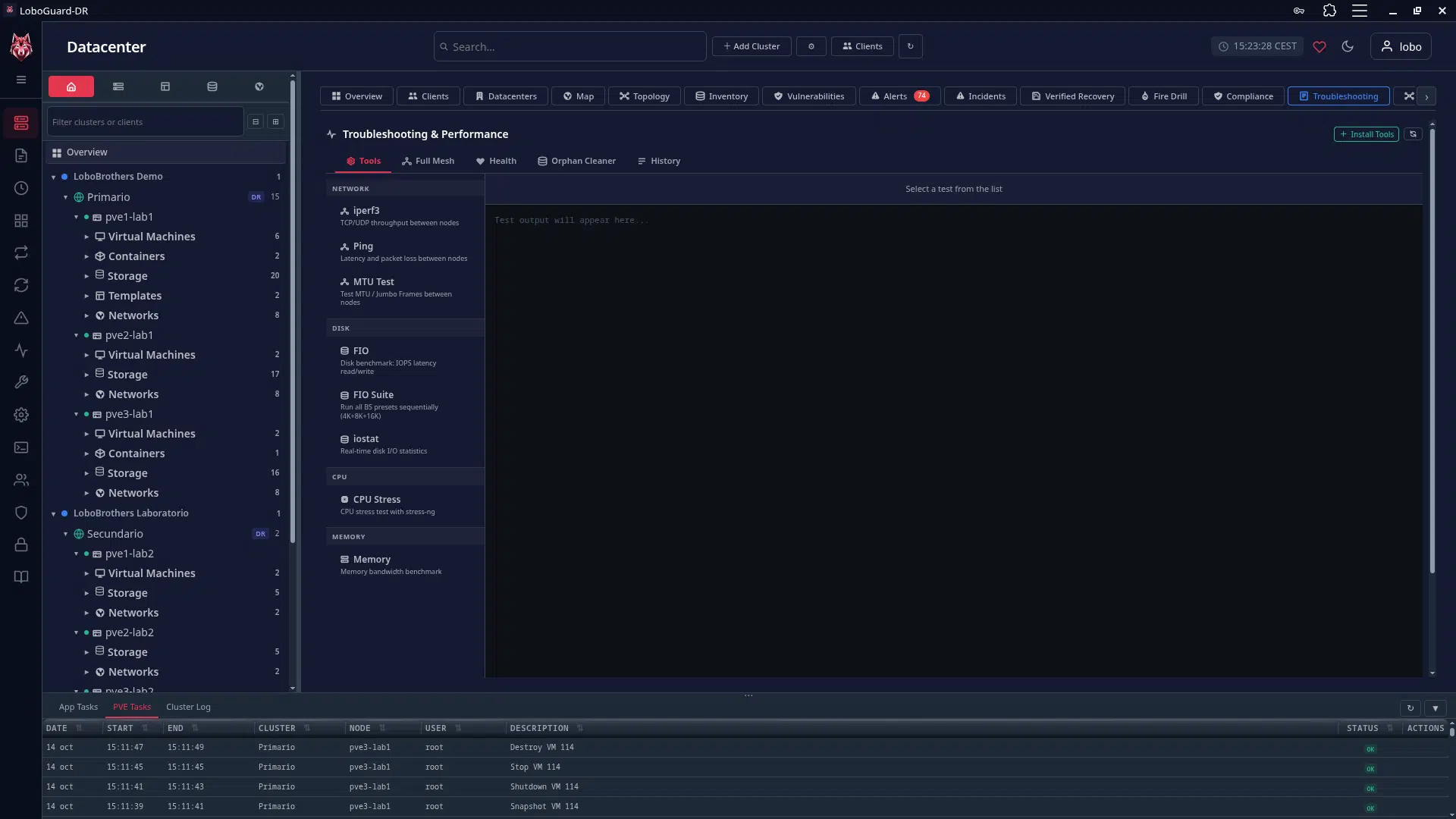
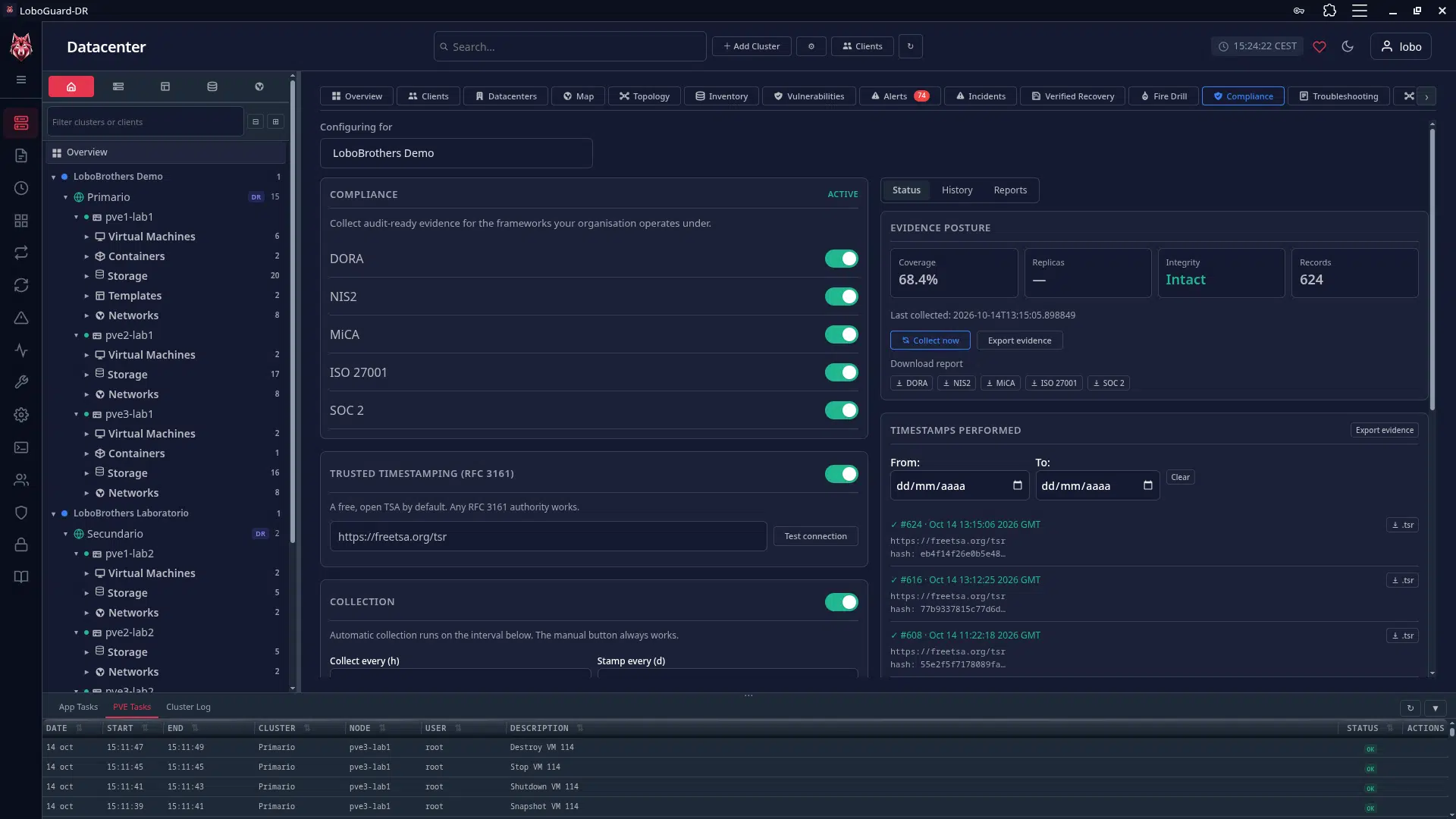
But it goes beyond management alone. LoboGuard-DC also includes monitoring, alerting, diagnostics, vulnerability analysis, and security features.
The idea is to bring relevant information about what’s happening across your infrastructure into a single environment, helping you identify potential issues and providing tools that make day-to-day operations easier.
Ultimately, our goal is to make managing a Proxmox infrastructure simpler, especially when you’re no longer dealing with a single server but with an environment that’s starting to become more complex.
LoboGuard-DR: Keeping Everything Running Is Great, but Being Able to Recover Is Even Better
There’s something we all know, even if we don’t always give it the importance it deserves until something goes wrong: service continuity.
Having a well-configured and monitored infrastructure is important, but having mechanisms in place to recover when something fails is just as essential.
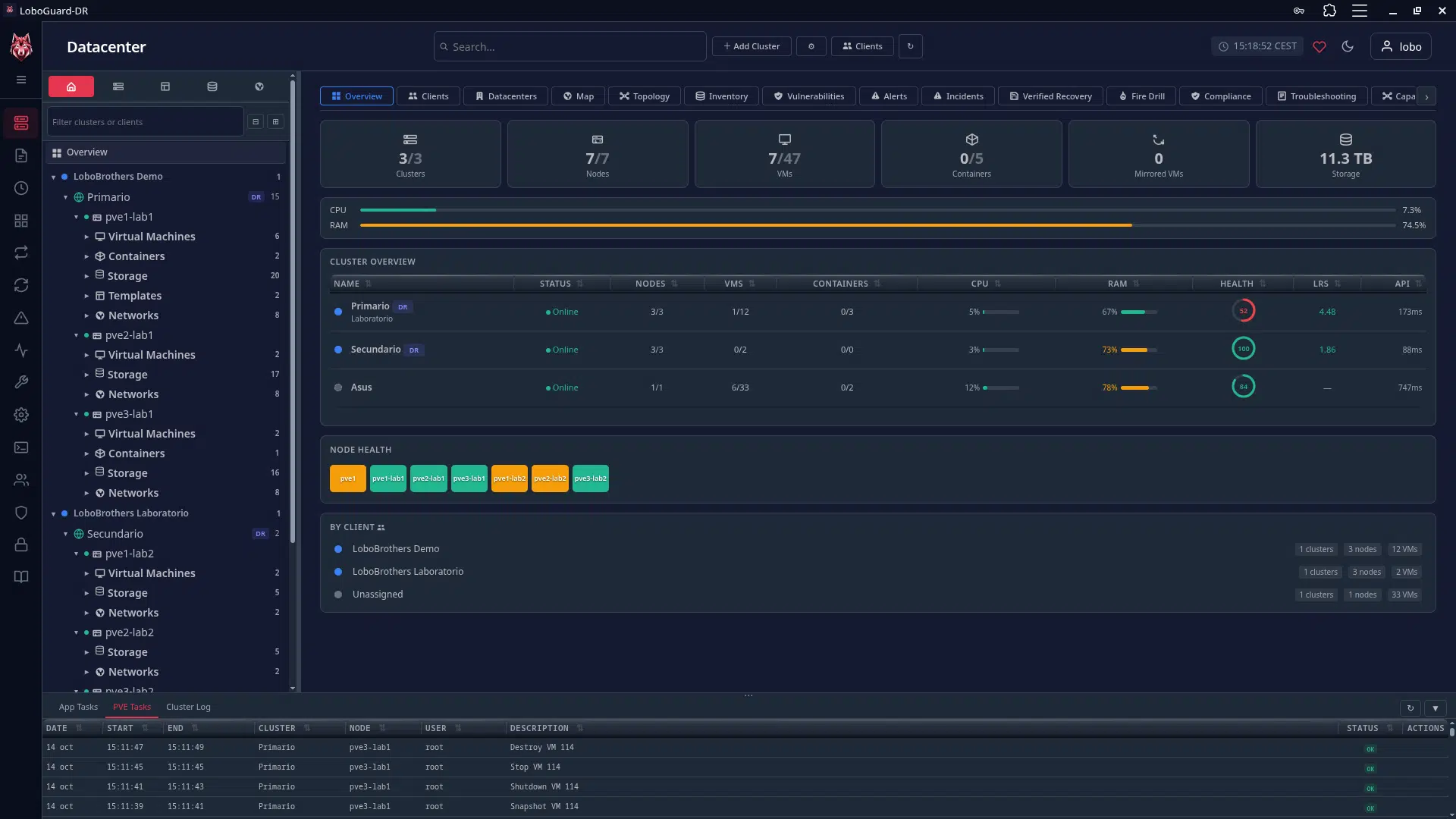
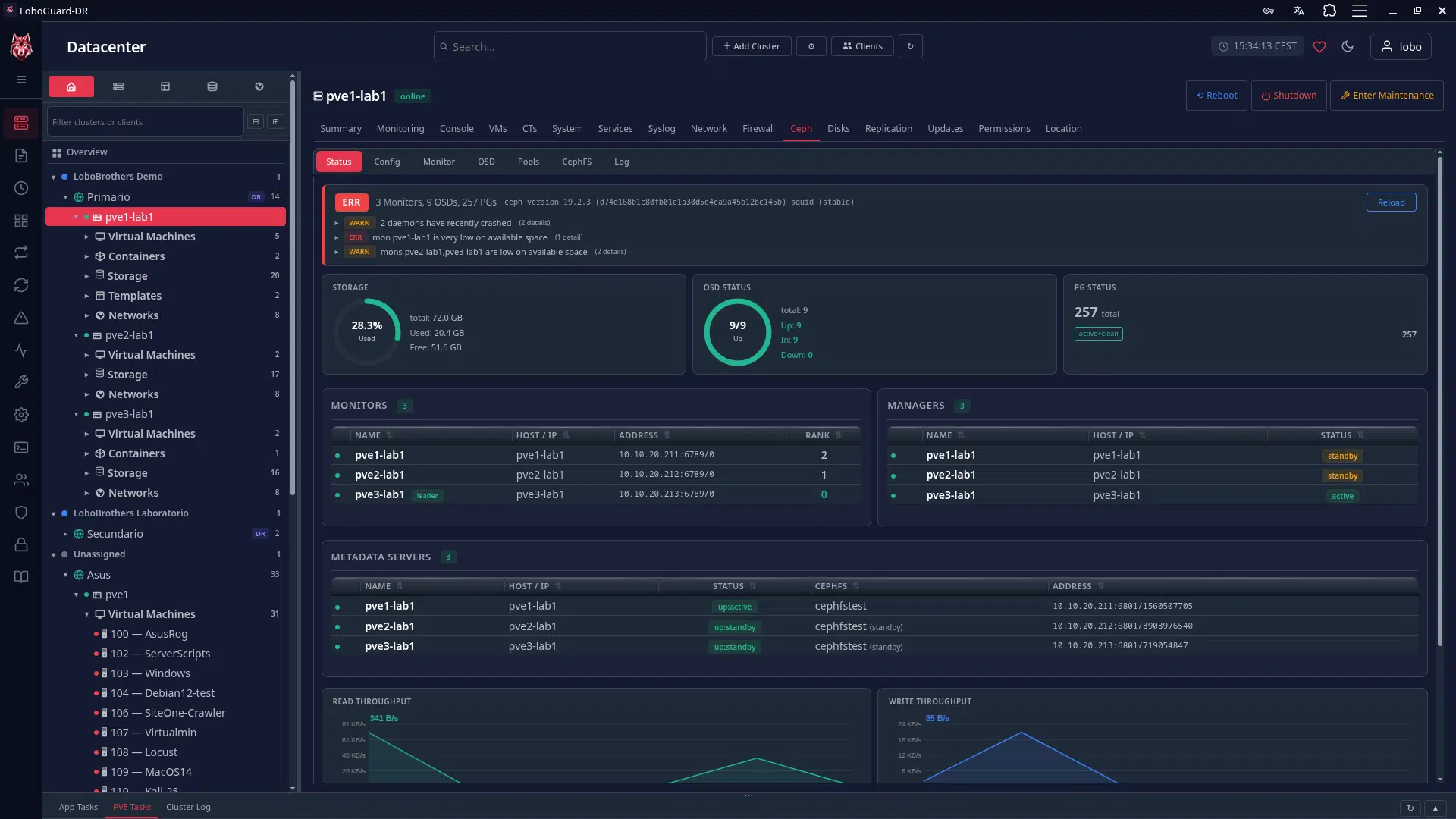
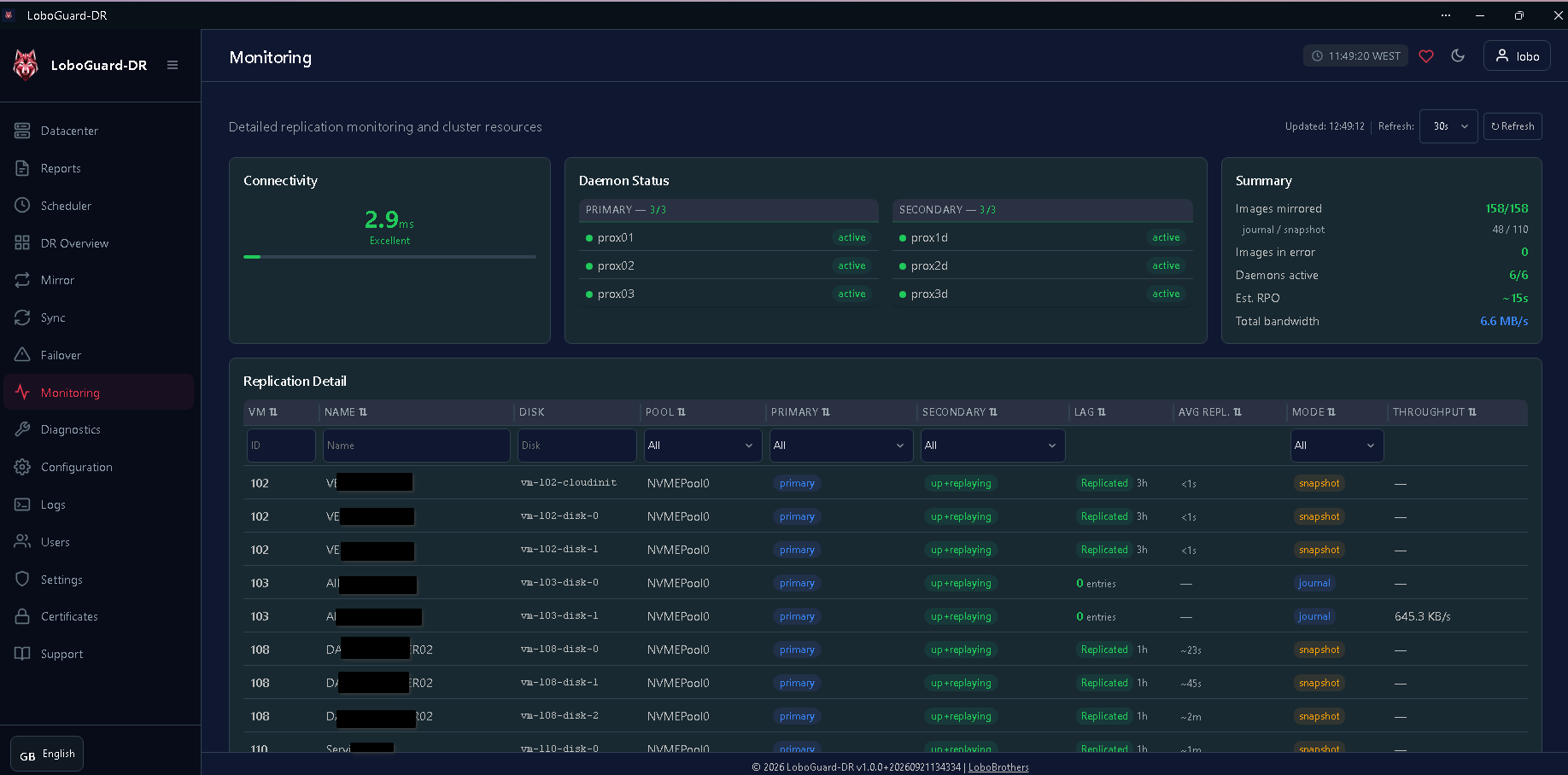
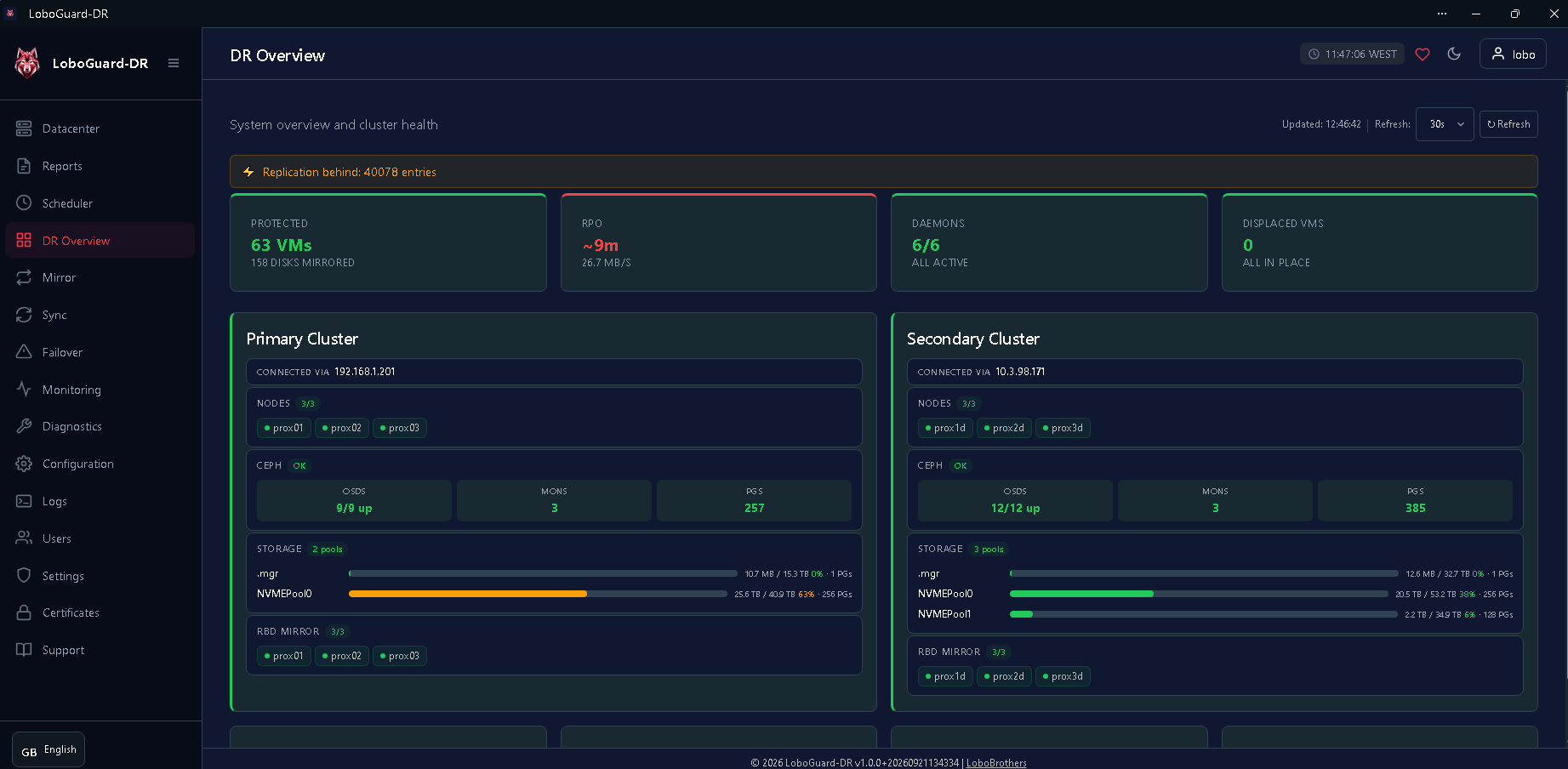
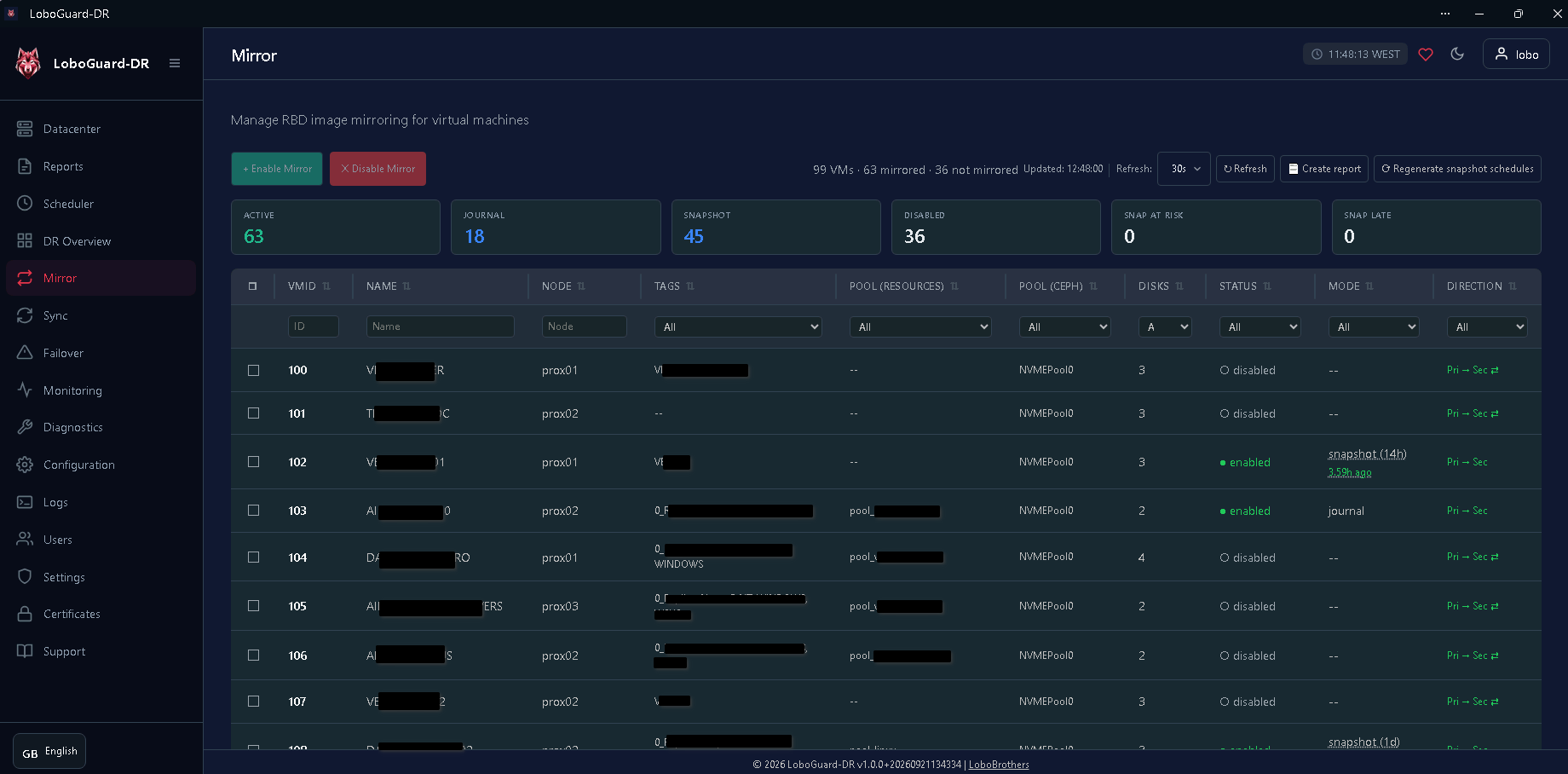
LoboGuard-DR is designed to simplify replication and disaster recovery between Proxmox clusters using Ceph storage.
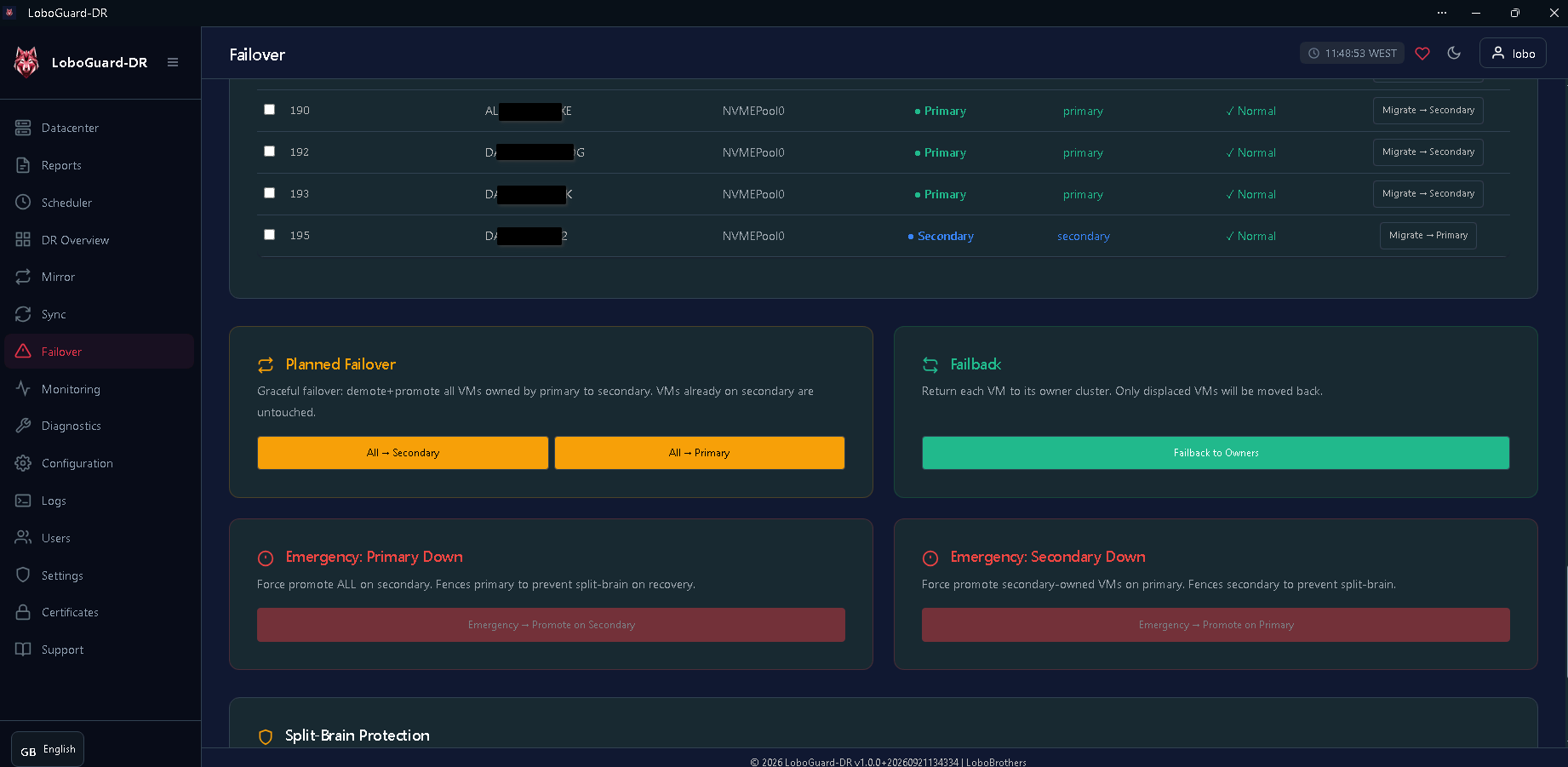
It includes RBD replication, failover and failback processes, replica status tracking, and protection mechanisms against situations such as split-brain.
And there’s one important detail worth highlighting: LoboGuard-DR includes LoboGuard-DC.
In other words, we’re not just talking about adding disaster recovery capabilities. It also includes LoboGuard-DC’s centralized management and monitoring features, providing a more comprehensive solution for managing infrastructure and handling recovery scenarios.
When a serious incident occurs, having clear information about the state of the environment and the tools to manage the infrastructure can make a huge difference.
The goal is to help ensure these scenarios are better prepared for and that recovery can be carried out in a controlled manner.
We’ve blurred some information in the following image because it shows a production environment.
LoboGuard-BOT: Your Infrastructure Can Talk to You on Telegram Too
And last but not least, we have LoboGuard-BOT.
As we mentioned earlier, LoboGuard-DC already includes monitoring and alerting features. So, what does the bot bring to the table?
The answer is simple: another way to interact with your infrastructure.
LoboGuard-BOT allows you to receive information and alerts, as well as perform certain management tasks directly from Telegram.
It offers features related to monitoring resources, virtual machines, containers, storage, backups, and Ceph, along with remote management capabilities and security controls.
The advantage is that you can check relevant information or receive notifications without constantly having to open the management interface.
It’s not intended to replace LoboGuard-DC’s monitoring capabilities, but rather to provide an additional tool for those who prefer to have certain features and notifications readily available through Telegram.
Ultimately, every administrator has their own way of working, and having different ways to access information can always come in handy.
A Note on Open Source and Licensing
We know this blog is primarily focused on the Open Source world. In fact, much of what we’ve published over the years revolves around free and open-source tools, community projects, and solutions that anyone can study and adapt to their own needs.
That’s why we want to make one thing clear: LoboGuard is a line of proprietary commercial products developed by Lobo Brothers and requires a per-node license.
We don’t want to disguise a commercial product as an Open Source project or change the philosophy of this blog. We simply felt like sharing something we’ve built ourselves this time, something we believe may be interesting to those of you working with Proxmox.
Developing and maintaining software takes time, testing, and ongoing effort. Our licensing model allows us to continue investing resources in these products, maintaining them, and introducing further improvements.
And although we’re talking about commercial software on this occasion, the spirit behind its development remains the same as what drives us to publish tutorials: solving technical problems and sharing what we do.
If You Work with Proxmox, Come and Check Us Out
We’ve brought together information about LoboGuard, its features, and our solutions on the project’s website:
If you manage Proxmox infrastructures and need to centralize management, implement monitoring, improve day-to-day operations, or prepare a disaster recovery strategy, we invite you to take a look.
As for us, we hope it won’t take so long to publish another article here. We have ideas, projects, and plenty of things to share; now we just need to keep finding those spare moments to sit down and write.
Thanks to everyone who’s still reading the blog after all this time.
See you soon!